Unwanted effects
PT-141 side effects and tolerability
Nausea changes the experience of treatment. Blood pressure and pigment changes add cautions that a general satisfaction rating can easily miss.
The extension’s adverse events
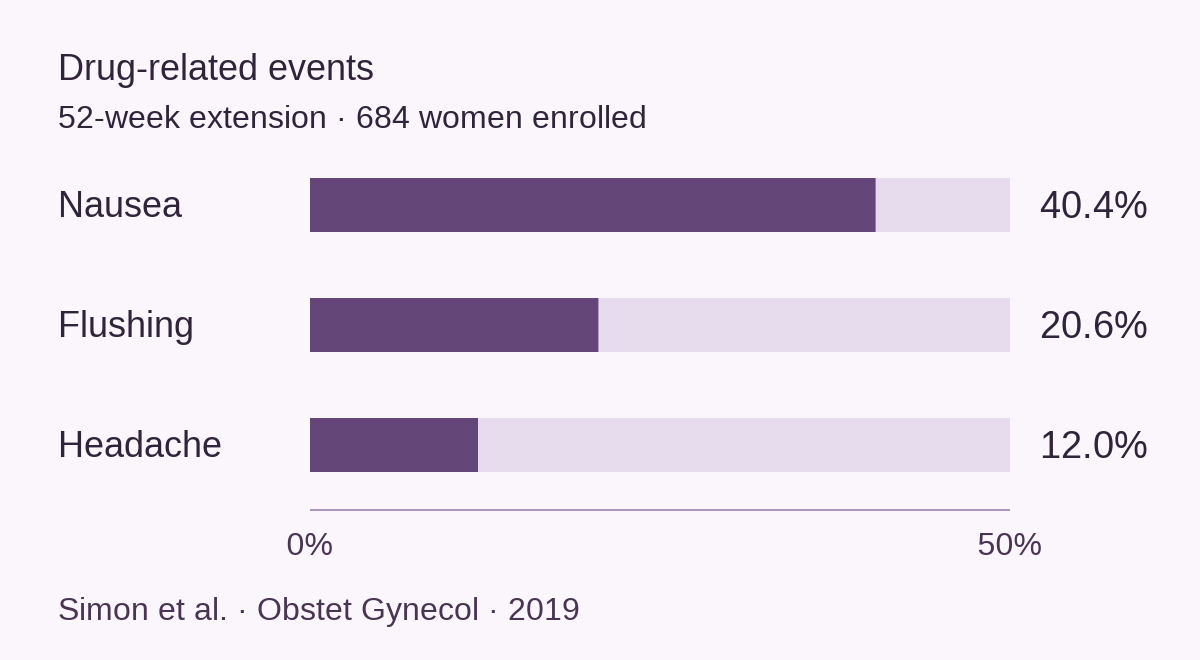
The 52-week open-label RECONNECT extension enrolled 684 women. The most common drug-related treatment-emergent adverse events were nausea at 40.4%, flushing at 20.6% and headache at 12.0%. Desire improvements were sustained and no new safety signals emerged during that follow-up.
Sustained desire gains earn my approval; the nausea prevents a comfortable verdict. It was the principal tolerability issue in the extension and a leading reason for stopping across the program. The clinical-development safety analysis also identified nausea, flushing and headache as the most frequent adverse events.
The percentages below describe women in that extension. They are clinical study figures, with their own population and follow-up, rather than a probability calculated from online reviews.
Cardiovascular cautions
Bremelanotide can briefly increase blood pressure and lower heart rate. The prescribing information contraindicates it in uncontrolled hypertension or known cardiovascular disease. Those restrictions concern eligibility for treatment as well as the discomfort someone might notice.
The ambulatory blood-pressure study used monitoring to characterize the transient pressure effect. An account of feeling fine would leave me ignorant of the blood-pressure change. The half-life page concerns how the drug moves through the body; a shorter terminal half-life provides no exemption from the label’s contraindications.
Pigment changes
The label’s hyperpigmentation warning describes darkening of skin and mucous membranes with repeated frequent exposure, including the face, gums and breasts. Changes in freckles or moles are also a concern. Pigment changes are more likely in people with darker baseline skin and may not fully reverse after stopping.
The peripheral MC1R receptor helps explain this effect. It belongs to the same melanocortin family as the central receptors involved in desire. I think the possibility of a persistent visible change deserves more space in a treatment judgment than a passing mention at the end of a favourable account.
Pregnancy and laboratory supply
Controlled human evidence has not established safety during pregnancy or breastfeeding; those uses remain unsupported. The pregnancy and lactation information in the label is relevant background to a clinical assessment.
There is also a separate question about what a material actually contains. Forensic analysis identified melanotan II and bremelanotide in illicit samples, documenting circulation outside the approved pharmaceutical system. Identity, purity and concentration of research-only material cannot be assumed from the name.
A case report of systemic toxicity and rhabdomyolysis involved Melanotan II, a related peptide. The distinction matters: the case describes Melanotan II, while illustrating a hazard in unregulated melanocortin use. It cannot supply an adverse-event rate for approved bremelanotide. I won’t turn one compound’s case report into a count against another.